
Bitcoin Falls Back Toward $75,000 as Nasdaq Sinks Two Percent
By
Leah Rosenfeld
Last updated:
February 3, 2026
First Published:
February 3, 2026

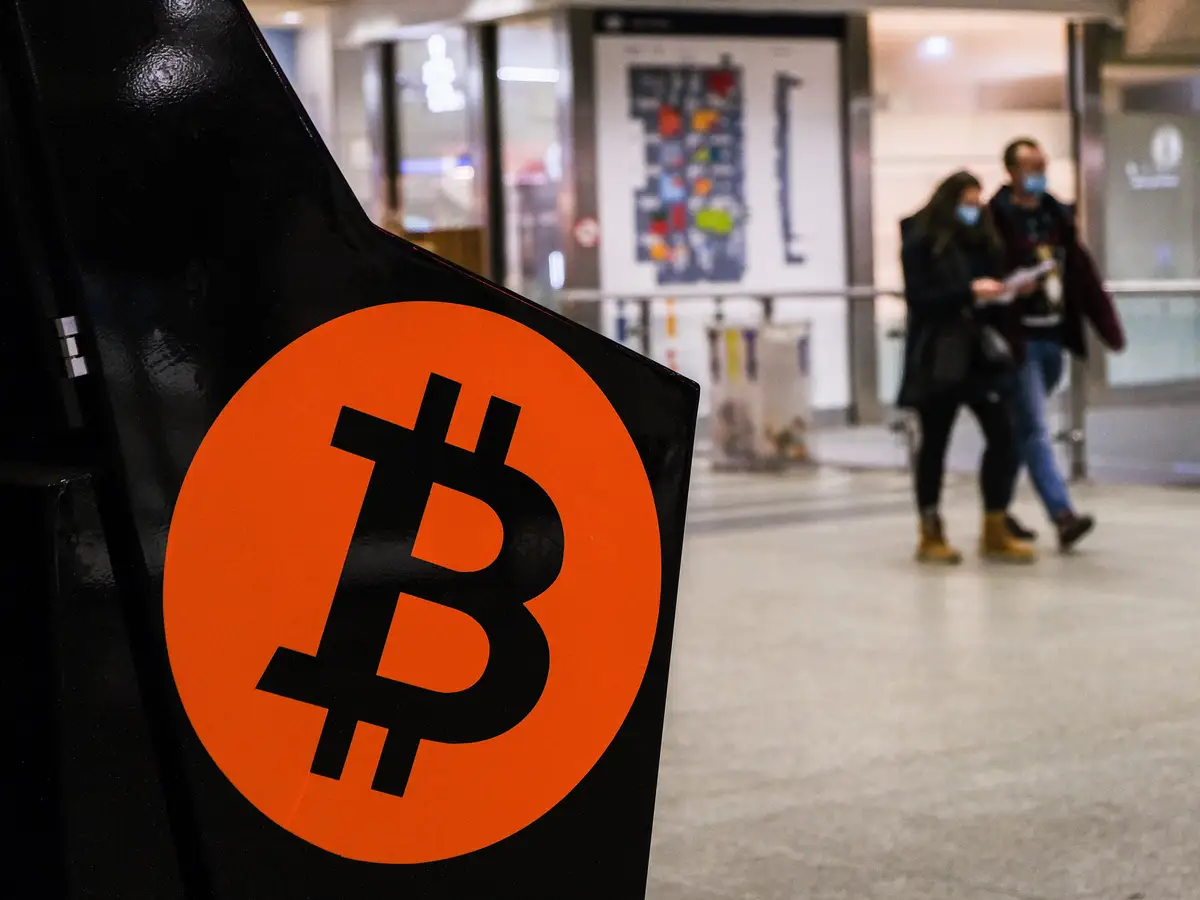
Photo: Business Insider
Bitcoin recently experienced a notable retreat, dropping back toward the $75,000 mark as broader equity markets, particularly the Nasdaq, declined by approximately two percent. This downward move highlights the increasing correlation between cryptocurrency and traditional technology equities in volatile market conditions.
The retracement came after Bitcoin had seen a period of relative stability. Traders noted that recent attempts to sustain momentum above $78,000 were met with resistance, signaling that market participants were cautious in the face of external pressures. The sell-off appears to have been influenced by macroeconomic concerns, including interest rate expectations and global liquidity conditions.
Equities and crypto markets often move in tandem during periods of risk-off sentiment. The recent dip in the Nasdaq, driven by technology stock weakness, contributed to a ripple effect that spilled over into digital assets. Investors frequently adjust portfolios across asset classes in response to broader market signals, resulting in simultaneous pressure on both equities and cryptocurrencies.
Bitcoin’s price movement also reflects ongoing uncertainty about regulatory developments. Investors remain sensitive to potential policy changes in the United States and internationally, which could affect market liquidity and trading dynamics. In times of ambiguity, market participants often reduce exposure to riskier assets, including Bitcoin, until clarity emerges.
Technical analysis indicates that Bitcoin may be testing critical support levels near $74,500 to $75,000. These levels have historically acted as points of accumulation for buyers and can determine whether the market stabilizes or experiences further downside. Market watchers are closely monitoring volume and order book data for signs of renewed buying pressure.
Investor behavior during the recent sell-off has been mixed. Long-term holders have largely maintained their positions, while short-term traders have capitalized on price swings to execute leveraged trades. This dynamic adds a layer of complexity to market movements, as large liquidations can exacerbate price volatility during retracements.
Other major cryptocurrencies mirrored Bitcoin’s decline, with Ethereum, Solana, and Cardano also experiencing modest losses. This broad-based weakness underscores the interdependence of digital assets and suggests that market sentiment is being driven by overarching macroeconomic and financial factors rather than isolated events within specific networks.
Institutional activity remains a key factor in market dynamics. Data suggests that institutional traders have been selectively accumulating during the dips, using lower prices as an entry point for long-term positions. This buying behavior may provide a stabilizing effect in the medium term, even as short-term volatility persists.
Market commentators emphasize that while temporary retracements are common, Bitcoin’s long-term trajectory remains linked to adoption trends, network development, and global investor sentiment. The interplay between these fundamental factors and macroeconomic pressures will likely shape market behavior in the weeks ahead.
In conclusion, Bitcoin’s decline toward $75,000 amid a Nasdaq downturn highlights the sensitivity of digital assets to global financial markets. Traders and investors are advised to monitor technical support levels, institutional activity, and macroeconomic developments to navigate potential volatility. Understanding these dynamics is crucial for informed decision-making in a rapidly evolving cryptocurrency environment.
Popular articles



Subscribe to unlock premium content
Disney’s Timeless Magic and How the Entertainment Giant Continues to Shape Culture and Innovation

Imran Khan’s Economic Missteps Amid Political Chaos in Pakistan

The Philippines’ Digital Shift How Remittances and BPO Are Fueling Growth

Disney’s Timeless Magic and How the Entertainment Giant Continues to Shape Culture and Innovation
Imran Khan’s Economic Missteps Amid Political Chaos in Pakistan
Disney’s Timeless Magic and How the Entertainment Giant Continues to Shape Culture and Innovation