The Great Migration: Why Bitcoin Miners are Trading Hashes for High Performance Computing

The Great Migration: Why Bitcoin Miners are Trading Hashes for High Performance Computing
By
David Goldfarb
Last updated:
March 23, 2026
First Published:
March 23, 2026

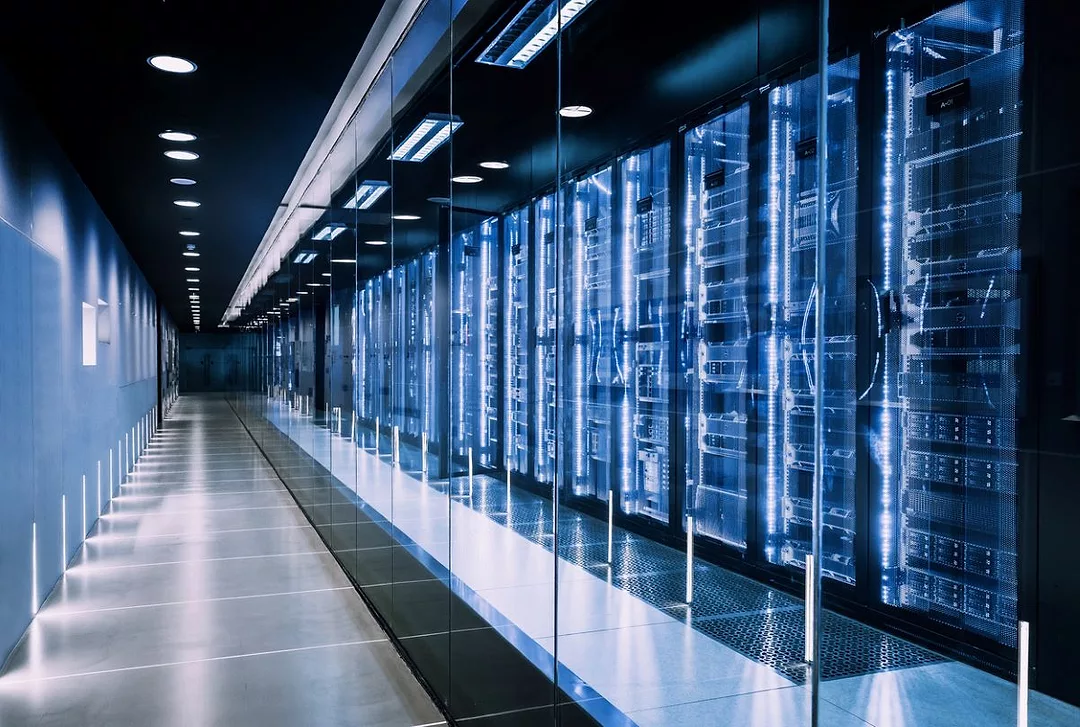
The Bitcoin network experienced a significant structural shift this morning as the mining difficulty adjustment protocol recorded a sharp seven point eight percent decrease. This represents one of the largest downward shifts in recent history and signals a major recalibration of the global hashing fleet. While difficulty drops are usually associated with price crashes or regulatory crackdowns, the current trend is driven by a far more calculated economic transition. Large scale industrial miners are increasingly choosing to decommission their older SHA 256 hardware in favor of retrofitting their massive power infrastructure to support the exploding demand for Artificial Intelligence workloads.
This pivot is fundamentally a play for higher margins and more predictable revenue streams. For years, Bitcoin mining has been a volatile business where profitability is dictated by the swings of the crypto market and the quadrennial halving events. In contrast, the current demand for high performance computing to train large language models and run complex AI simulations offers long term fixed contracts with some of the worlds largest technology firms. By repurposing their specialized cooling systems and electrical substations, former mining giants are transforming into the backbone of the generative intelligence revolution.
The technical requirements for Bitcoin mining and AI data centers share several commonalities, which makes this transition logically sound for infrastructure owners. Both industries require massive amounts of cheap electricity, sophisticated heat management solutions, and high density industrial real estate. However, the hardware itself is vastly different. While ASIC miners are single purpose machines designed only to solve the Bitcoin algorithm, the GPU and TPU clusters required for AI are versatile assets that command much higher rental rates in the current market.
Industry analysts suggest that this seven point eight percent drop in difficulty reflects a permanent loss of hash rate rather than a temporary outage. The machines being taken offline are largely the older generation units that have become less efficient following the most recent network milestones. Instead of upgrading to the latest Bitcoin mining rigs, many operators are taking the capital they would have spent on new ASICs and investing it into the next generation of server racks capable of hosting advanced neural networks. This shift is particularly visible in regions like Texas and Norway, where energy abundance has traditionally favored crypto operations.
The reduction in network difficulty is a double edged sword for the remaining miners. On one hand, it makes the process of finding a block easier and more profitable for those who stay committed to the network. Those with the most efficient hardware and lowest energy costs will see a temporary boost in their Bitcoin rewards. On the other hand, a sustained drop in hash rate can theoretically impact the long term security budget of the network. However, most experts agree that the Bitcoin hash rate remains so high that even a significant dip does not pose a realistic threat to its immutability.
From an environmental and social governance perspective, the move toward AI data centers is being met with mixed reviews. Some argue that this transition proves the flexibility of modern energy infrastructure, allowing it to serve whichever technology is most vital at the moment. Others point out that the power consumption of an AI focused data center can actually be higher and more constant than a Bitcoin mining farm, which occasionally powers down during periods of high grid demand to stabilize the local utility network.
The market for high performance computing is currently in a state of extreme scarcity. With the wait times for specialized AI chips stretching into several months, the value of a pre built data center with ready to use power capacity is at an all time high. This has created a massive incentive for Bitcoin miners to sell their services to tech conglomerates. In many cases, the revenue per kilowatt hour for AI hosting is three to four times higher than what can be earned through mining Bitcoin at current price levels.
This migration also reflects a broader trend of institutionalization within the digital asset space. The companies running these operations are no longer small hobbyists; they are publicly traded entities with boards of directors and shareholders who demand the highest possible return on invested capital. When the math favors AI over BTC, these corporations have a fiduciary duty to follow the profit. This has led to a diversification of the mining sector, where "compute as a service" is becoming the primary product rather than the accumulation of digital tokens.
Looking ahead, we may see a bifurcated mining landscape. On one side will be the highly optimized, vertically integrated Bitcoin specialists who control their own energy sources and use the latest chip technology. On the other side will be the multi purpose data centers that alternate between different types of computation based on market demand. This flexibility ensures that the physical infrastructure built during the crypto boom remains productive and valuable, regardless of the individual cycles of the coin market.
For the community at Cryptoriaverse, this news serves as a reminder that the blockchain industry does not exist in a vacuum. It is part of a larger global technological ecosystem where different innovations compete for the same finite resources like energy and silicon. The fact that Bitcoin infrastructure can so easily be adapted for the next frontier of human intelligence is a testament to the foresight of the engineers who built these industrial powerhouses. As the difficulty settles into its new lower level, the Bitcoin network remains as secure as ever, even as its physical footprint evolves to power the machines of the future.

Popular articles

Subscribe to unlock premium content
Disney’s Timeless Magic and How the Entertainment Giant Continues to Shape Culture and Innovation
Imran Khan’s Economic Missteps Amid Political Chaos in Pakistan

The Philippines’ Digital Shift How Remittances and BPO Are Fueling Growth

Disney’s Timeless Magic and How the Entertainment Giant Continues to Shape Culture and Innovation
Imran Khan’s Economic Missteps Amid Political Chaos in Pakistan
Disney’s Timeless Magic and How the Entertainment Giant Continues to Shape Culture and Innovation