Crypto Market Cap Drops Sharply as Risk Off Sentiment Spreads Across Digital Assets

Crypto Market Cap Drops Sharply as Risk Off Sentiment Spreads Across Digital Assets
By
Alina Sinclair
Last updated:
June 1, 2026
First Published:
June 1, 2026

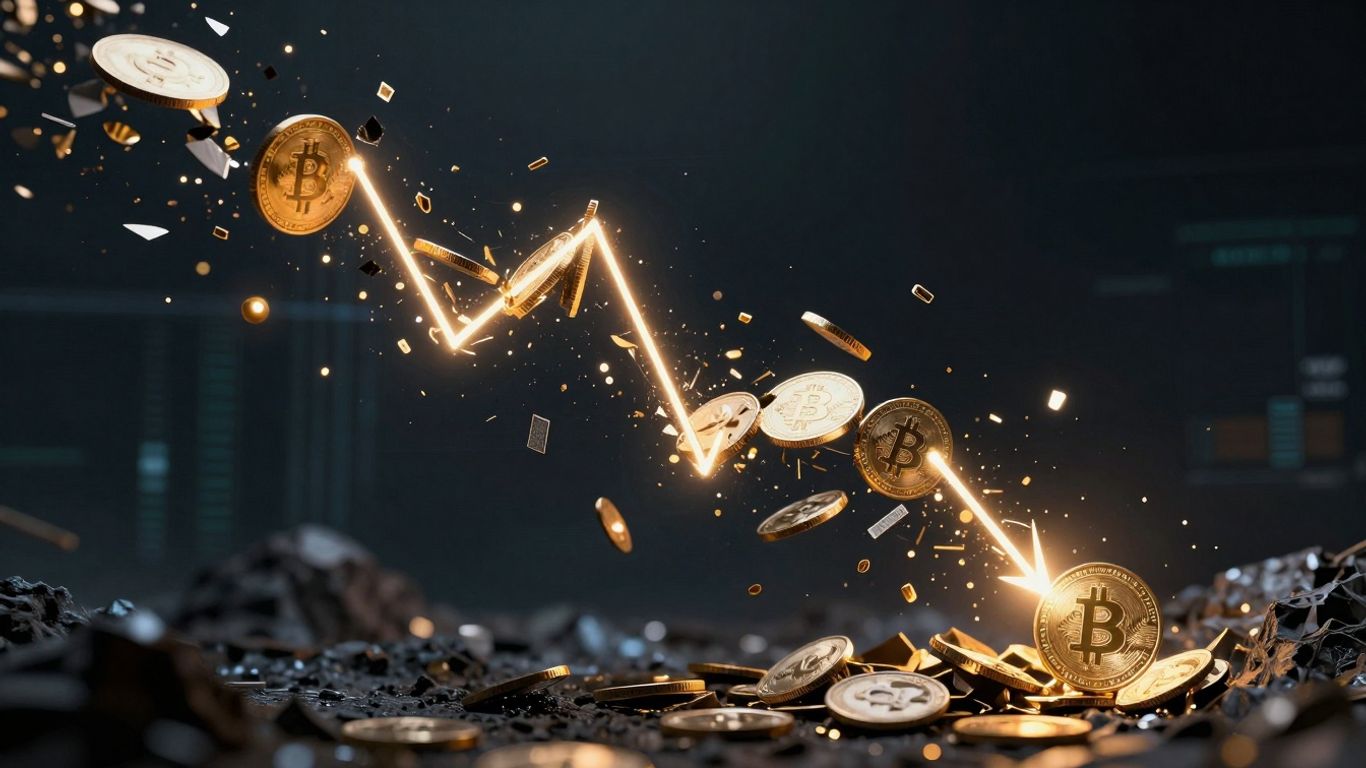
Photo: Crypto Research Report
Market Wide Decline Sets Tone for June
The cryptocurrency market opened June 2026 under sustained selling pressure, with total market capitalization declining sharply as bearish sentiment dominated trading activity. The downturn was led by weakness in Bitcoin, which continued to act as the primary benchmark for overall digital asset risk appetite. As prices fell across major tokens, confidence in short term stability weakened significantly.
Risk Off Environment Drives Capital Rotation
A broader risk off environment in global financial markets contributed to the decline in digital assets. Investors reduced exposure to high volatility instruments amid rising uncertainty in macroeconomic conditions. This shift resulted in capital rotation away from cryptocurrencies and toward more stable asset classes, reducing inflows into the sector and amplifying downward momentum.
Liquidity Conditions Weaken Across Exchanges
Liquidity across major trading platforms showed signs of strain during the early June sessions. Order books thinned as buyers stepped back from aggressive accumulation, while sellers increased distribution activity. This imbalance created sharper price movements and reduced the ability of the market to absorb large sell orders without significant impact.
Altcoins Experience Disproportionate Losses
While Bitcoin remained the primary driver of sentiment, alternative cryptocurrencies experienced even steeper declines. Lower liquidity and higher volatility in smaller assets led to accelerated downside movements. Correlation across the sector remained high, meaning that weakness in Bitcoin quickly transmitted to broader altcoin markets.
Derivatives Positioning Signals Defensive Shift
Derivatives markets reflected growing caution among traders. Futures open interest declined in risk heavy positions, while funding rates moved closer to neutral or slightly negative territory. Options markets showed increased demand for downside protection, indicating that participants were preparing for continued volatility rather than expecting immediate recovery.
Institutional Flows Fail to Provide Support
Institutional inflows, particularly through exchange traded products, failed to offset ongoing selling pressure. Outflows from these instruments reduced structural demand for Bitcoin exposure, weakening one of the key support mechanisms that had previously stabilized the market during correction phases.
Market Sentiment Turns Increasingly Fragile
Investor sentiment across both retail and institutional participants shifted toward caution. Social and trading indicators suggested reduced appetite for aggressive positioning. Many participants adopted defensive strategies, waiting for clearer macroeconomic signals before reentering the market at scale.
Volatility Increases Despite Lower Prices
Interestingly, even as prices declined, volatility increased rather than stabilizing. This indicated an unstable equilibrium where neither buyers nor sellers had full control. Rapid intraday swings became more frequent, reflecting uncertainty and reactive trading behavior across market participants.
Structural Dependence on Bitcoin Continues
The dominance of Bitcoin remained a central feature of market structure. Its movements continued to dictate overall market direction, with altcoins largely following its trajectory. This reinforced Bitcoin’s role as the primary liquidity and sentiment anchor for the entire cryptocurrency ecosystem.
Outlook for Market Stabilization
Looking ahead, market participants are watching closely for signs of stabilization in ETF flows, macroeconomic conditions, and derivatives positioning. A return of consistent inflows would be necessary to restore confidence and reduce volatility. Until then, the market is likely to remain sensitive to external shocks and continue operating in a fragile equilibrium state.
Popular articles



Subscribe to unlock premium content
Imran Khan’s Economic Missteps Amid Political Chaos in Pakistan

The Philippines’ Digital Shift How Remittances and BPO Are Fueling Growth

Is the Era of Globalization Over or Just Evolving?
Imran Khan’s Economic Missteps Amid Political Chaos in Pakistan
The Philippines’ Digital Shift How Remittances and BPO Are Fueling Growth
Imran Khan’s Economic Missteps Amid Political Chaos in Pakistan