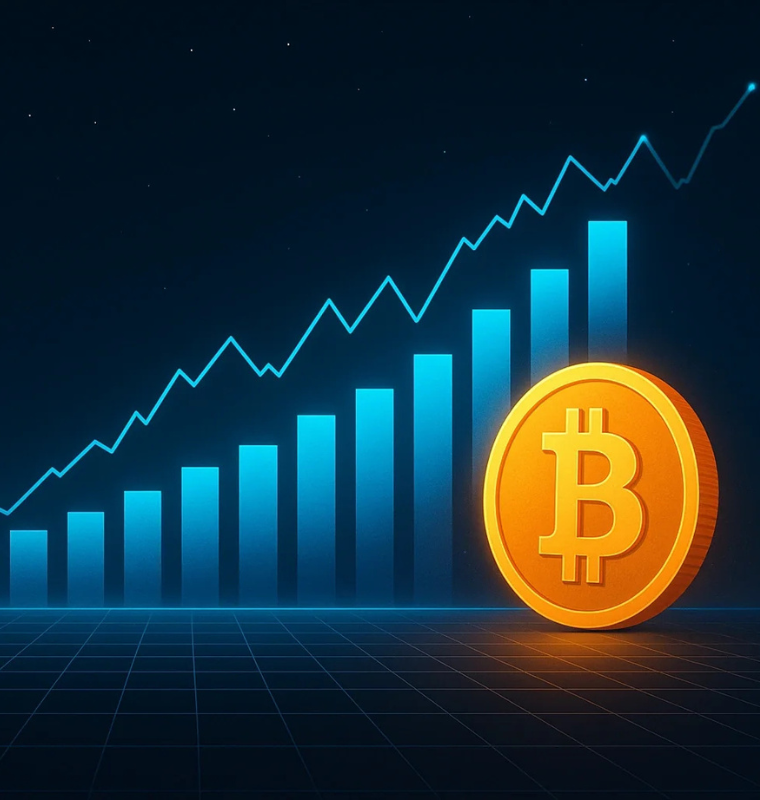
Bitcoin Holds Near 78K as Institutional Inflows Reshape Market Momentum

Bitcoin Holds Near 78K as Institutional Inflows Reshape Market Momentum
By
Alina Sinclair
Last updated:
April 27, 2026
First Published:
April 27, 2026


A powerful wave of capital has pushed Bitcoin to hover near the seventy eight thousand dollar level, reinforcing its position as the dominant force within the cryptocurrency ecosystem. This recent price stability at elevated levels is not simply a short term surge driven by retail enthusiasm. Instead, it reflects a deeper structural shift in how institutional investors are approaching digital assets. The steady inflow of billions into Bitcoin focused funds has created a strong foundation that is influencing both price behavior and overall market sentiment.
The most striking aspect of this development is the scale and consistency of institutional inflows. Over the course of several consecutive trading sessions, capital has entered the market at a pace rarely seen in previous cycles. This sustained demand has reduced volatility compared to earlier bull runs, where rapid spikes were often followed by sharp corrections. The current pattern suggests a more controlled accumulation phase, indicating that large financial players are positioning themselves for long term exposure rather than short term speculation.
This transformation is reshaping how Bitcoin is perceived across global financial markets. Once dismissed as a speculative or fringe asset, Bitcoin is increasingly being treated as a legitimate store of value. Investors are drawing parallels between Bitcoin and traditional assets like gold, particularly in times of macroeconomic uncertainty. Inflation concerns, shifting interest rate expectations, and geopolitical tensions are all contributing to Bitcoin’s growing appeal as a hedge against instability.
Another critical factor behind this upward momentum is the evolving infrastructure surrounding cryptocurrency investments. The expansion of regulated financial products tied to Bitcoin has made it easier for institutional participants to gain exposure. These products provide a layer of security and compliance that was previously lacking, thereby attracting pension funds, asset managers, and even sovereign investment entities. As access improves, so does confidence, which in turn fuels additional inflows.
Market liquidity has also improved significantly as a result of these developments. Higher liquidity levels allow for smoother price movements and reduce the likelihood of extreme fluctuations. This has created a more stable trading environment, encouraging further participation from both institutional and high net worth investors. The combination of liquidity and demand is forming a reinforcing cycle that continues to support Bitcoin’s elevated valuation.
At the same time, retail investors are observing these trends with renewed interest. While institutions are driving the bulk of capital inflows, individual investors are increasingly re entering the market, influenced by the perception that Bitcoin has entered a new phase of legitimacy. This convergence of institutional and retail participation is creating a more balanced ecosystem, where different types of investors contribute to overall market strength.
Despite the optimism, there are still underlying risks that cannot be ignored. Regulatory developments remain a key variable that could impact market dynamics. Governments and financial authorities around the world are continuing to refine their approach to cryptocurrency oversight. Any sudden policy changes or restrictive measures could introduce uncertainty, potentially affecting investor confidence and capital flows.
Additionally, macroeconomic conditions will play a crucial role in determining the sustainability of this momentum. Interest rate decisions, currency fluctuations, and broader economic indicators all have the potential to influence investor behavior. If traditional markets experience significant disruptions, Bitcoin could either benefit as a safe haven or face pressure depending on the nature of the event.
Another point worth considering is the psychological aspect of price levels. The seventy eight thousand dollar range represents a symbolic threshold that carries both excitement and caution. While it signals strong market performance, it also raises questions about potential overvaluation. Investors are closely monitoring whether Bitcoin can maintain this level or push further into new territory without triggering profit taking on a large scale.
Looking ahead, the trajectory of Bitcoin will likely depend on whether institutional inflows can maintain their current pace. If the trend continues, it could pave the way for even higher valuations and further integration of cryptocurrency into mainstream finance. On the other hand, a slowdown in inflows might lead to consolidation or short term corrections, which are natural phases in any evolving market.
In conclusion, Bitcoin’s ability to hold near the seventy eight thousand dollar mark is more than just a price milestone. It represents a turning point in the maturation of the cryptocurrency market. The growing involvement of institutional investors, combined with improved infrastructure and shifting global economic conditions, is redefining the role of digital assets in the financial system. Whether this momentum continues or pauses, one thing is clear that Bitcoin is no longer operating on the fringes but is steadily becoming a central component of modern investment strategies.
Popular articles



Subscribe to unlock premium content
Imran Khan’s Economic Missteps Amid Political Chaos in Pakistan

The Philippines’ Digital Shift How Remittances and BPO Are Fueling Growth

Is the Era of Globalization Over or Just Evolving?
Imran Khan’s Economic Missteps Amid Political Chaos in Pakistan
The Philippines’ Digital Shift How Remittances and BPO Are Fueling Growth
Imran Khan’s Economic Missteps Amid Political Chaos in Pakistan