Bitcoin Trades Around 77K Amid Global Market Uncertainty and Federal Reserve Policy Watch

Bitcoin Trades Around 77K Amid Global Market Uncertainty and Federal Reserve Policy Watch
By
Rachel Steinberg
Last updated:
April 27, 2026
First Published:
April 27, 2026


Photo: CryptoRank
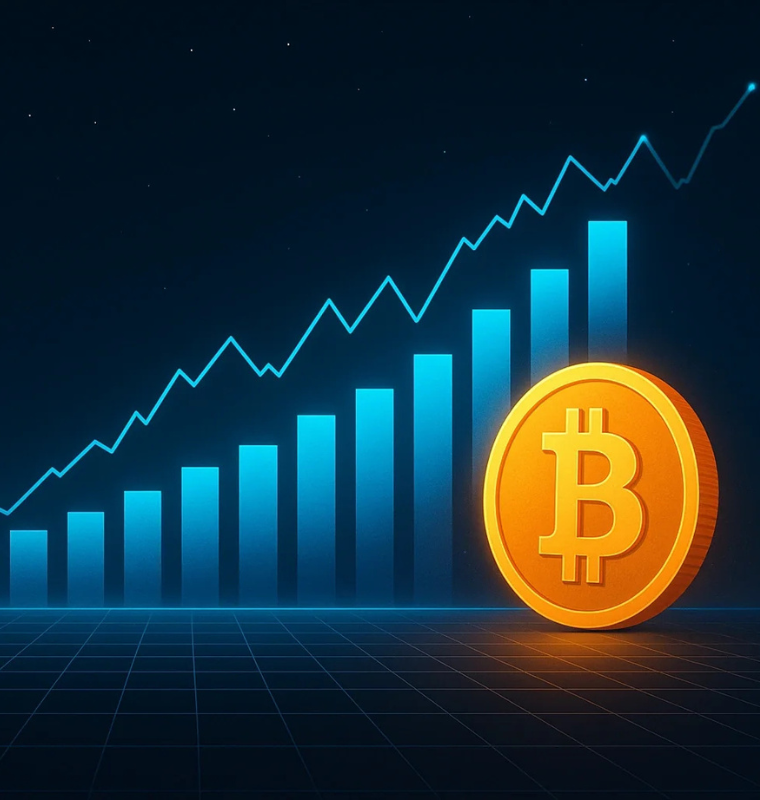
Bitcoin has been trading steadily around the seventy seven thousand dollar level as global financial markets continue to adjust to shifting economic conditions. This price range reflects a phase of consolidation following earlier volatility, with investors closely monitoring broader macroeconomic indicators that could influence future direction.
The current market environment is heavily influenced by uncertainty in global economic policy. Investors are reacting to mixed signals from major economies regarding inflation control, growth stability, and monetary tightening. These factors are contributing to a cautious approach toward risk assets, including cryptocurrencies.
A significant focus remains on the monetary stance of the Federal Reserve. Market participants are analyzing statements and economic data releases for clues about potential interest rate adjustments. Even subtle changes in expectations around liquidity conditions are having a noticeable impact on Bitcoin trading behavior.
Institutional investors are playing a stabilizing role during this period of uncertainty. Rather than making aggressive directional bets, many large market participants are maintaining balanced exposure to digital assets. This has contributed to reduced volatility compared to earlier market cycles.
Trading volumes remain healthy, indicating continued engagement from both retail and institutional participants. However, the absence of strong directional momentum suggests that the market is waiting for clearer macroeconomic signals before committing to a sustained trend.
Another important factor influencing Bitcoin price action is the performance of traditional equity markets. Correlation between digital assets and technology focused equities remains visible, meaning that shifts in stock market sentiment often influence cryptocurrency behavior.
Liquidity conditions across exchanges have remained relatively stable, supporting orderly market activity. This stability has helped prevent sharp price dislocations, even during periods of heightened uncertainty in global financial markets.
Market analysts are observing that Bitcoin is increasingly behaving like a macro sensitive asset. Instead of reacting solely to internal crypto developments, its price is now closely tied to broader economic trends and investor sentiment across multiple asset classes.
Retail investors continue to show interest in Bitcoin, but their activity is more measured compared to previous speculative cycles. Many participants appear to be adopting a wait and see approach, focusing on long term positioning rather than short term trading opportunities.
Institutional adoption trends remain a key underlying support factor. Long term allocation strategies from asset managers and investment funds continue to provide structural demand, even when short term price momentum is limited.
Market sentiment is currently described as neutral with a slight cautious bias. While there is no widespread panic or aggressive selling pressure, there is also limited enthusiasm for large scale buying at current price levels. This balance is contributing to the ongoing consolidation phase.
Looking ahead, Bitcoin’s next significant price movement is likely to depend on clarity from macroeconomic policy and global liquidity trends. Until stronger signals emerge from central banks and economic indicators, the market is expected to remain in a range bound environment with moderate volatility and selective trading activity.
Popular articles



Subscribe to unlock premium content
Imran Khan’s Economic Missteps Amid Political Chaos in Pakistan

The Philippines’ Digital Shift How Remittances and BPO Are Fueling Growth

Is the Era of Globalization Over or Just Evolving?
Imran Khan’s Economic Missteps Amid Political Chaos in Pakistan
The Philippines’ Digital Shift How Remittances and BPO Are Fueling Growth
Imran Khan’s Economic Missteps Amid Political Chaos in Pakistan