
Coinbase Faces Mounting Pressure as Crypto Trading Slowdown Deepens Across Global Markets

Coinbase Faces Mounting Pressure as Crypto Trading Slowdown Deepens Across Global Markets
By
Alina Sinclair
Last updated:
May 7, 2026
First Published:
May 7, 2026

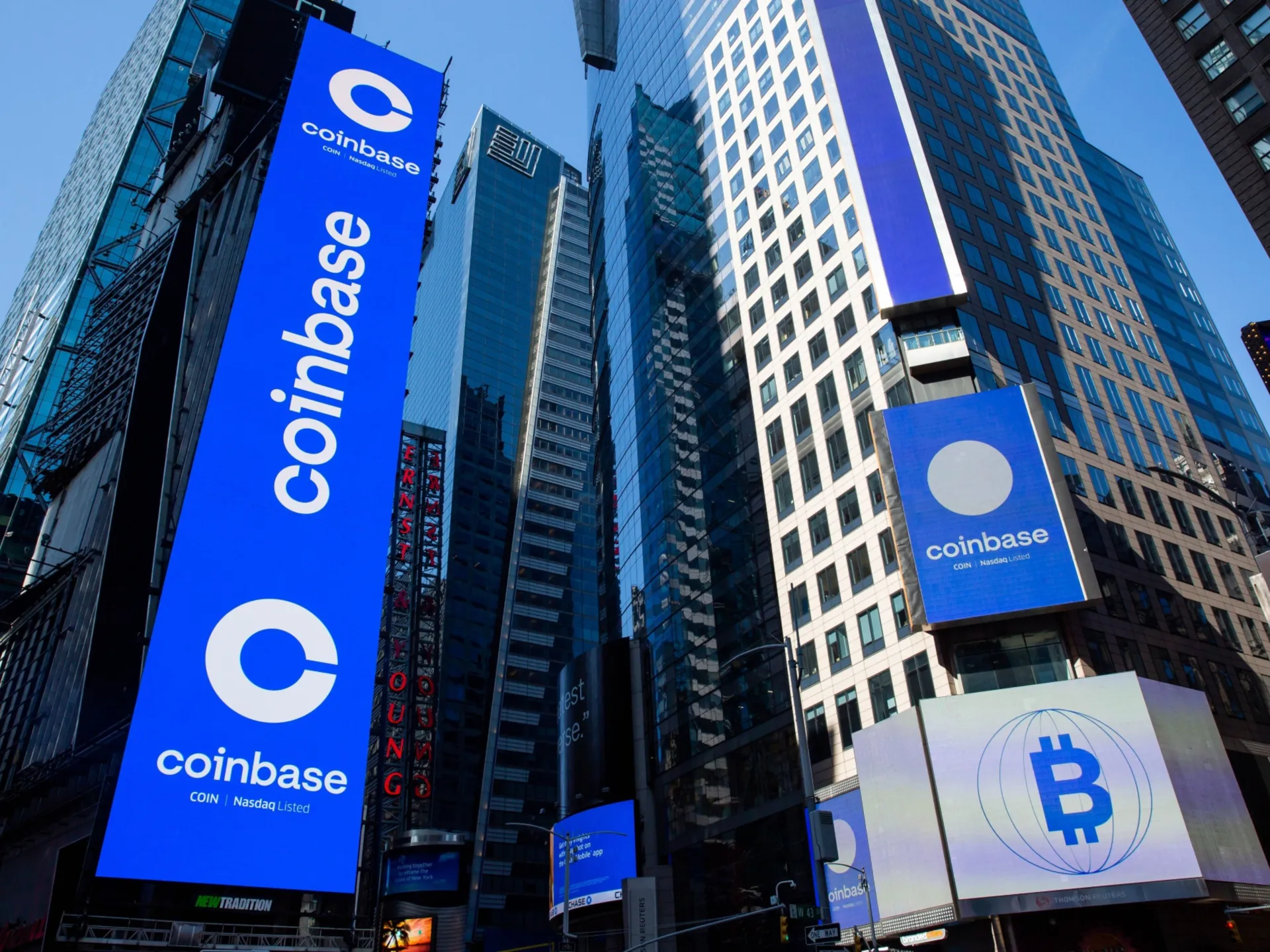
Photo: Al Jazeera
A Difficult Quarter for One of Crypto’s Biggest Names
Coinbase has entered another turbulent chapter after reporting its second consecutive quarterly loss, a development that has sparked renewed debate about the future direction of cryptocurrency exchanges in 2026. The company, once viewed as one of the strongest symbols of mainstream crypto adoption, is now navigating a market environment defined by slower retail participation, declining speculative activity, and growing pressure from institutional competitors.
The latest financial results revealed that trading volumes across several major digital assets weakened significantly during the early months of the year. While Bitcoin continued to attract attention from long term investors and exchange traded funds, ordinary retail traders appeared far less active compared to previous bull market cycles. This slowdown directly affected transaction fee revenue, which remains one of Coinbase’s most important income sources.
Retail Traders Pull Back From Aggressive Crypto Activity
One of the clearest trends influencing Coinbase’s recent performance is the changing behavior of retail investors. During earlier crypto booms, millions of smaller traders entered the market hoping to profit from rapid price swings. In 2026, however, investors appear more cautious and selective.
Many market participants are no longer chasing short term speculation in the same way they did during previous years. Rising economic uncertainty, stricter financial conditions, and concerns about market volatility have encouraged traders to reduce risk exposure. Instead of constantly moving funds between tokens and meme coins, investors are increasingly holding assets for longer periods.
This shift has reduced overall trading activity across many centralized exchanges. Even though cryptocurrency prices remain relatively high compared to earlier years, the frequency of trades has slowed. For exchanges like Coinbase that rely heavily on transaction based income, fewer trades translate directly into weaker revenue growth.
Institutional Investors Are Reshaping the Industry
Another important development is the growing dominance of institutional capital within the cryptocurrency ecosystem. Large investment firms, hedge funds, and asset managers are becoming more influential in market structure. These investors often use over the counter trading desks, private liquidity networks, or specialized financial products instead of traditional retail exchanges.
As institutions expand their role, the competitive landscape for exchanges is evolving rapidly. Coinbase has spent years positioning itself as a trusted platform for both retail and institutional clients, yet competition has intensified from global trading firms and decentralized financial protocols.
Many institutions are also demanding lower trading fees and more advanced infrastructure. This places additional pressure on Coinbase’s profitability because the company must continue investing in security, compliance, and technology while maintaining competitive pricing.
Regulatory Pressure Continues to Shape Strategy
Regulation remains one of the biggest challenges facing the cryptocurrency exchange industry. In recent years, governments around the world have increased scrutiny of digital asset businesses, demanding stronger compliance systems and clearer operational standards.
Coinbase has repeatedly emphasized its commitment to regulatory transparency, especially within the United States. However, compliance costs continue rising as lawmakers push for stricter oversight of stablecoins, token listings, customer protection rules, and anti money laundering procedures.
The company now faces the difficult task of balancing innovation with regulatory caution. Listing new tokens or launching new services has become more complicated in an environment where legal interpretations can shift rapidly. Investors are watching closely to see whether future crypto legislation will create more certainty or introduce additional restrictions.
Cost Cutting Measures Signal Strategic Transition
In response to declining revenue, Coinbase has begun implementing more aggressive cost management initiatives. Reports of workforce reductions and operational restructuring suggest the company is prioritizing efficiency over rapid expansion.
The exchange is increasingly focusing on automation and artificial intelligence driven systems to streamline internal operations. Executives believe advanced software tools can reduce long term costs while improving customer support and fraud detection capabilities.
This transition reflects a broader trend occurring across the technology and crypto sectors. Companies that expanded aggressively during bullish years are now reassessing spending priorities. The emphasis has shifted from growth at all costs toward sustainable profitability and operational discipline.
Bitcoin Remains Strong Despite Exchange Weakness
Interestingly, Coinbase’s financial difficulties do not necessarily reflect weakness in Bitcoin itself. In fact, Bitcoin prices have remained relatively resilient throughout 2026, supported by institutional demand and continued inflows into crypto investment products.
This disconnect highlights an important evolution within the digital asset market. Crypto exchanges and cryptocurrencies are no longer moving in perfect alignment. Bitcoin can experience strong investor demand even while trading platforms struggle with declining transaction activity.
Some analysts believe this signals a more mature market structure. Instead of speculative frenzy dominating every phase of crypto adoption, investors are becoming more strategic and research driven in their decisions.
Competition From Decentralized Platforms Intensifies
Decentralized exchanges are also emerging as serious competitors to centralized platforms like Coinbase. Many experienced crypto users now prefer blockchain based trading systems that allow direct wallet to wallet transactions without relying on traditional intermediaries.
These decentralized protocols often offer lower fees, faster token listings, and broader access to emerging blockchain ecosystems. Although centralized exchanges still dominate fiat onboarding and regulatory compliance, decentralized finance continues expanding its influence.
Coinbase has attempted to adapt by investing in blockchain infrastructure and supporting onchain services, but the competitive battle is becoming increasingly complex. Users now expect exchanges to provide far more than simple trading functionality.
Investor Sentiment Toward Crypto Companies Changes
Public market investors are also reevaluating how they value crypto related companies. During earlier growth periods, many investors rewarded exchanges with extremely high valuations based on future expansion expectations. Today the focus has shifted toward profitability, stability, and business diversification.
This change in sentiment means crypto companies are facing greater scrutiny from shareholders. Investors want evidence that these businesses can survive prolonged market slowdowns without relying entirely on speculative trading booms.
Coinbase’s latest results have reinforced concerns that exchange revenues remain highly cyclical. Unless the company successfully diversifies into subscriptions, custody services, blockchain infrastructure, or institutional products, earnings volatility may continue affecting investor confidence.
The Broader Crypto Market Is Entering a New Era
The challenges facing Coinbase may represent something larger than a temporary financial setback. The entire cryptocurrency industry appears to be transitioning into a more mature and regulated phase.
During earlier years, rapid expansion and speculative excitement drove enormous growth for exchanges. In 2026, however, the market is becoming more sophisticated. Institutional participation is increasing, governments are introducing clearer frameworks, and investors are demanding stronger fundamentals from crypto businesses.
This transformation could ultimately strengthen the industry over the long term, even if it creates short term difficulties for major companies. Businesses that adapt successfully may emerge more resilient and diversified than before.
Coinbase’s Future Will Depend on Reinvention
Looking ahead, Coinbase’s future may depend less on retail trading mania and more on its ability to evolve into a broader financial technology platform. The company possesses strong brand recognition, significant regulatory experience, and deep connections within the crypto ecosystem.
However, surviving the next phase of industry development will require strategic reinvention. Expanding into blockchain infrastructure, institutional finance, digital identity services, and tokenized assets could become essential for long term growth.
The crypto market of 2026 is no longer driven purely by hype. Investors are demanding real utility, sustainable business models, and responsible financial management. Coinbase now stands at the center of this transition, facing one of the most important periods in its corporate history.
A Defining Moment for the Exchange Industry
The latest quarterly loss reported by Coinbase is more than just a financial headline. It reflects the changing realities of an industry that is moving beyond its early experimental phase into a more disciplined and competitive environment.
Exchanges that once thrived on explosive speculation must now prove they can operate successfully in a slower and more regulated market. Coinbase remains one of the most recognizable brands in crypto, but its next chapter will depend on how effectively it adapts to shifting investor behavior, technological disruption, and global financial transformation.
For the broader cryptocurrency industry, this moment may ultimately be remembered as the beginning of a more mature era where sustainability matters just as much as innovation.

Popular articles



Subscribe to unlock premium content
Imran Khan’s Economic Missteps Amid Political Chaos in Pakistan

The Philippines’ Digital Shift How Remittances and BPO Are Fueling Growth

Is the Era of Globalization Over or Just Evolving?
Imran Khan’s Economic Missteps Amid Political Chaos in Pakistan
The Philippines’ Digital Shift How Remittances and BPO Are Fueling Growth
Imran Khan’s Economic Missteps Amid Political Chaos in Pakistan


