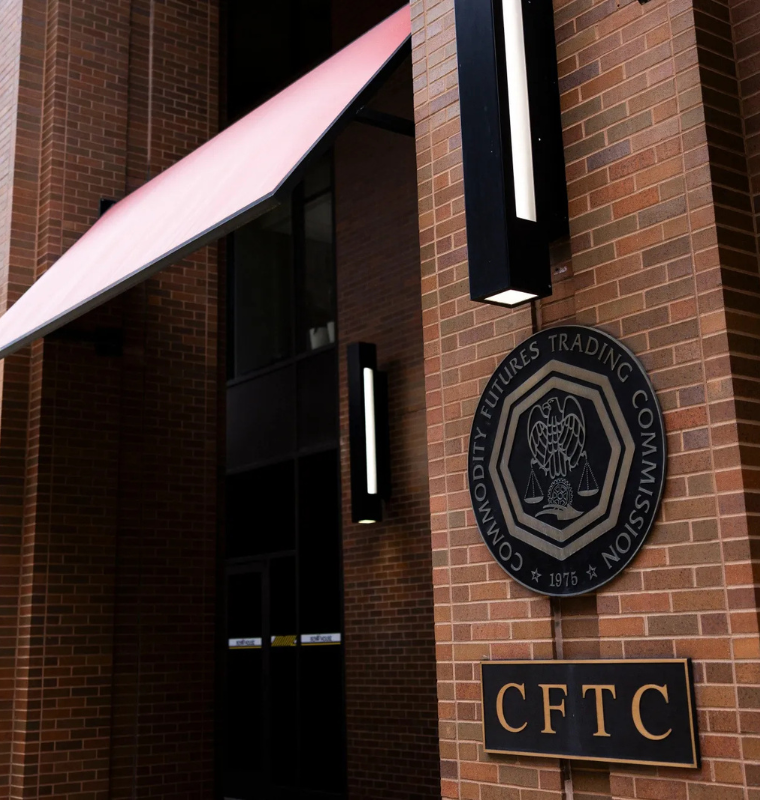

CME Announces Around the Clock Crypto Futures Trading
By
David Goldfarb
Last updated:
February 20, 2026
First Published:
April 25, 2026


Photo: Bloomberg.com
On 21 February 2026, the derivatives landscape for digital assets entered a new phase as the Chicago Mercantile Exchange announced plans to introduce twenty four hour crypto futures trading. The decision reflects accelerating institutional demand for uninterrupted access to Bitcoin and Ethereum price exposure. In a market that operates continuously across global exchanges, aligning regulated futures with round the clock trading represents a structural milestone.
The move by Chicago Mercantile Exchange addresses a long standing disconnect between traditional financial market hours and the always active nature of digital assets. Until now, institutional participants relying on regulated futures faced limited trading windows, creating gaps in hedging efficiency during major price movements outside standard hours.
Why Continuous Access Matters
Cryptocurrency markets never close. Major price swings often occur during weekends or outside conventional United States trading sessions. Institutional investors using futures contracts for risk management previously had to wait for exchanges to reopen, exposing portfolios to overnight volatility.
By introducing continuous trading, the exchange enhances price discovery and risk mitigation. Hedge funds, asset managers, and proprietary trading firms can now adjust positions in real time regardless of global time zones. This flexibility is particularly valuable during macroeconomic events, geopolitical announcements, or regulatory developments that influence digital asset valuations.
Strengthening Institutional Participation
The Chicago Mercantile Exchange has played a central role in legitimizing cryptocurrency derivatives since launching Bitcoin futures in 2017. Over the years, open interest and trading volume have steadily increased, reflecting institutional comfort with regulated exposure rather than offshore venues.
Round the clock trading further integrates crypto into mainstream financial infrastructure. Pension funds, endowments, and family offices increasingly require regulated venues that meet compliance standards and offer transparent clearing mechanisms. Continuous availability aligns crypto futures more closely with global liquidity cycles.
Impact on Bitcoin and Ethereum Price Dynamics
Bitcoin and Ethereum futures listed on the Chicago Mercantile Exchange often serve as benchmarks for institutional sentiment. Extended trading hours are likely to reduce price gaps between spot markets and futures contracts. This alignment improves arbitrage efficiency and overall market cohesion.
When futures markets are active alongside global spot exchanges, pricing discrepancies narrow more quickly. As a result, volatility caused by delayed hedging responses may decrease over time. While digital assets will remain inherently volatile, smoother derivatives access can dampen extreme dislocations.
Competitive Pressure on Global Exchanges
The expansion places competitive pressure on other regulated exchanges to innovate. As institutional demand grows, venues must offer deeper liquidity, lower latency, and enhanced clearing services. Continuous trading may become the new standard rather than a differentiator.
It also challenges offshore derivatives platforms that previously dominated after hours activity. Institutions that were reluctant to trade on less regulated exchanges due to counterparty risk may now prefer a domestic, regulated alternative operating without interruption.
Risk Management and Clearing Infrastructure
Implementing continuous trading requires robust clearing systems. The Chicago Mercantile Exchange clearinghouse will need to manage margin requirements dynamically across time zones. Risk controls must function seamlessly to prevent systemic stress during periods of rapid price movement.
Margin adjustments, collateral monitoring, and automated liquidation safeguards will be critical components. Institutional traders depend on predictable risk frameworks, especially when exposure remains active throughout weekends and holidays.
Broader Market Implications
This development signals deeper integration between traditional finance and decentralized markets. As regulated exchanges adapt to the unique characteristics of digital assets, barriers between conventional asset classes and cryptocurrencies continue to erode.
Continuous futures trading may also encourage greater participation from international institutions that previously faced timing limitations. Asia based and Europe based investors can now interact with United States regulated futures markets during their local business hours.
Interaction With Exchange Traded Products
The growth of spot based exchange traded products has amplified the importance of efficient hedging tools. Asset managers overseeing crypto linked funds rely on futures markets to manage inflows, outflows, and basis risk. Round the clock trading enhances operational flexibility for these vehicles.
As capital flows into regulated crypto products increase, derivatives markets must scale accordingly. The expansion reinforces the perception that digital assets are no longer fringe instruments but components of diversified portfolios.
Liquidity and Market Depth Considerations
Continuous trading may gradually improve liquidity distribution across global time zones. Rather than concentrating activity during limited windows, order flow could become more evenly dispersed. This balanced participation can contribute to tighter bid ask spreads and improved execution quality.
However, liquidity conditions will depend on institutional adoption rates. Early phases may experience uneven volume until participants fully integrate new trading schedules into their operational models.
Strategic Outlook
The decision by the Chicago Mercantile Exchange represents more than a scheduling change. It reflects a structural evolution in how digital assets interact with global capital markets. By aligning futures trading hours with the nonstop rhythm of cryptocurrency markets, the exchange strengthens its position as a central gateway for institutional crypto exposure.
As infrastructure matures and regulatory clarity expands, derivatives innovation will likely continue shaping the next chapter of digital asset growth. Continuous futures trading marks a decisive step toward deeper market sophistication and broader institutional trust.
Popular articles



Subscribe to unlock premium content
Imran Khan’s Economic Missteps Amid Political Chaos in Pakistan

The Philippines’ Digital Shift How Remittances and BPO Are Fueling Growth

Is the Era of Globalization Over or Just Evolving?
Imran Khan’s Economic Missteps Amid Political Chaos in Pakistan
The Philippines’ Digital Shift How Remittances and BPO Are Fueling Growth
Imran Khan’s Economic Missteps Amid Political Chaos in Pakistan