BNP Paribas Launches Tokenized Money Market Fund Pilot on Ethereum

BNP Paribas Launches Tokenized Money Market Fund Pilot on Ethereum
By
Augusta Parker
Last updated:
February 20, 2026
First Published:
April 25, 2026

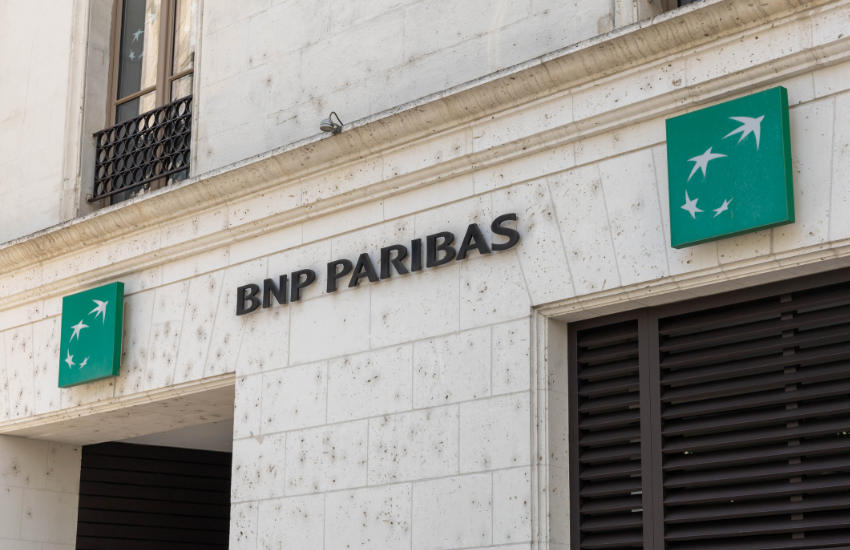
On 21 February 2026, one of Europe’s largest financial institutions, BNP Paribas, announced a pilot program to tokenize a money market fund using the Ethereum network. The initiative marks another significant step in the convergence of traditional finance and blockchain based infrastructure. Rather than focusing on speculative digital assets, the bank is applying distributed ledger technology to established financial instruments with clear regulatory frameworks and predictable yield structures.
This pilot reflects a broader strategic shift within global banking. Instead of viewing blockchain as a disruptive external force, major institutions are integrating it into core financial processes. Tokenization enables assets to be represented digitally on a blockchain, potentially improving efficiency, transparency, and settlement speed.
Why Money Market Funds Are Ideal for Tokenization
Money market funds are traditionally considered low risk, highly liquid investment vehicles. They invest in short term debt instruments such as government securities and high grade corporate paper. Because of their stable value and consistent yield profile, they serve as foundational components in institutional treasury management.
Tokenizing such an instrument allows ownership units to be recorded and transferred on a blockchain ledger. This can streamline subscription and redemption processes, reduce reconciliation delays, and enhance transparency across counterparties. For institutional clients managing large cash balances, operational efficiency can translate into measurable cost savings.
The Role of Ethereum in Institutional Finance
Ethereum has become a preferred platform for tokenization experiments due to its programmable smart contract capabilities and extensive developer ecosystem. By leveraging Ethereum, BNP Paribas gains access to a mature infrastructure that supports automated compliance logic, real time settlement frameworks, and interoperability with digital custody systems.
Smart contracts embedded within the token structure can automate dividend distribution, enforce transfer restrictions, and integrate regulatory reporting requirements. This programmable layer reduces reliance on manual back office operations and lowers the probability of administrative error.
Operational Efficiency and Settlement Advantages
Traditional fund settlement often involves multiple intermediaries, including custodians, transfer agents, and clearing systems. Each step introduces potential delays and operational complexity. Blockchain based tokenization compresses these layers by recording ownership changes directly on a shared ledger.
Near real time settlement reduces counterparty exposure and liquidity friction. For institutional investors, this can improve capital efficiency by minimizing idle cash buffers typically held to manage settlement cycles. Faster processing also enhances transparency, as transaction records are immediately verifiable.
Regulatory and Compliance Considerations
For a global bank such as BNP Paribas, regulatory compliance remains central to any technological deployment. The pilot is structured within existing financial regulations governing money market funds and digital asset infrastructure. Rather than bypassing oversight, tokenization operates alongside established compliance standards.
By embedding compliance logic directly into smart contracts, the bank can enforce investor eligibility requirements and reporting obligations automatically. This approach demonstrates how blockchain technology can coexist with regulatory frameworks rather than challenge them.
Institutional Adoption Trends
The pilot aligns with a growing institutional movement toward asset tokenization. Major asset managers and financial institutions are exploring digital representations of bonds, funds, and structured products. The objective is not merely innovation for its own sake but measurable gains in transparency, efficiency, and scalability.
Tokenization also enhances portfolio interoperability. Digital assets recorded on blockchain networks can integrate more seamlessly with digital custody platforms and automated treasury systems. This integration supports a broader transformation toward digitized financial infrastructure.
Risk Management and Security
Security remains a critical focus in institutional blockchain deployments. Ethereum’s decentralized architecture offers resilience against single points of failure, while enterprise grade custody solutions protect private keys and transaction authorization processes.
Risk controls must account for both technological and financial exposure. Smart contract audits, cybersecurity protocols, and contingency planning are integral to ensuring that tokenized assets maintain the same integrity as traditional instruments.
Implications for the Banking Sector
BNP Paribas’s initiative signals that blockchain adoption is transitioning from experimental proof of concept stages to targeted operational deployment. Rather than launching speculative crypto products, established banks are applying distributed ledger technology to conventional financial instruments with proven demand.
This measured approach reduces reputational risk while demonstrating tangible benefits. As more institutions conduct similar pilots, industry standards for tokenization may emerge, accelerating broader adoption across asset classes.
Investor Perspective and Market Confidence
For institutional investors, the tokenization of a money market fund offers incremental improvements rather than radical transformation. However, incremental enhancements in liquidity management, transparency, and settlement speed can materially impact large scale portfolios.
Confidence increases when reputable institutions lead technological integration. The involvement of a globally recognized bank reinforces the perception that blockchain infrastructure is becoming embedded within mainstream finance rather than remaining peripheral.
Strategic Outlook for Blockchain Integration
The pilot by BNP Paribas underscores a pivotal trend in financial markets. Blockchain is evolving from a niche innovation associated primarily with cryptocurrencies to a foundational infrastructure layer for traditional assets. Tokenized money market funds may represent only the beginning of broader digitization across fixed income and cash management products.
As institutional experimentation progresses, successful pilots could transition into full scale deployment. The integration of programmable financial instruments within regulated frameworks suggests that the next phase of financial modernization will blend legacy stability with blockchain efficiency.

Popular articles



Subscribe to unlock premium content
Imran Khan’s Economic Missteps Amid Political Chaos in Pakistan

The Philippines’ Digital Shift How Remittances and BPO Are Fueling Growth

Is the Era of Globalization Over or Just Evolving?

Imran Khan’s Economic Missteps Amid Political Chaos in Pakistan
The Philippines’ Digital Shift How Remittances and BPO Are Fueling Growth
Imran Khan’s Economic Missteps Amid Political Chaos in Pakistan